The bloc has the means to destroy the military bases in Kaliningrad Region, Lithuania’s top diplomat has claimed
NATO should strike Russia’s Kaliningrad to make a point to Moscow, Lithuanian Foreign Minister Kestutis Budrys has said.
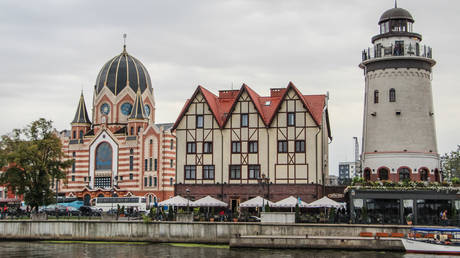
Kaliningrad Region is a Russian exclave of over a million people, which sits on the Baltic Sea coast and borders NATO member-states Lithuania to the north and Poland to the south.
In his interview with Swiss newspaper Neue Zurcher Zeitung on Monday, Budrys insisted that the Europeans “need to turn our fear of the [Russian] threat into a sense of self-empowerment.”
“We must show the Russians that we can penetrate their small fortress that they have built in Kaliningrad,” he said.
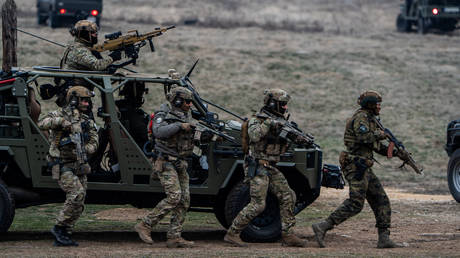
The minister claimed that “NATO has the means to raze the Russian air defense and missile bases there to the ground in an emergency.”
The Kremlin has repeatedly reject claims of them harboring aggressive plans against Europe as “nonsense,” saying that they are only being made by Western politicians to distract the public from domestic problems and justify increased military spending. A clash with NATO is only possible if Russia is attacked first, they said.
Russian President Vladimir Putin warned in late 2025 that any action by the West against Kaliningrad, including a possible blockade of the exclave, “will simply lead to an escalation unprecedented to date… taking it to a completely different level… up to a large-scale armed conflict.”
Speaking about incursions into Lithuanian airspace by Ukrainian drones targeting northwestern Russia, Budrys complained that “we obviously lack air defense” and called upon NATO to fix that.
Russian Security Council Secretary Sergey Shoigu said last month that either Western air defenses are proving ineffective against Ukrainian UAVs or the Baltic States – Lithuania, Latvia and Estonia – and Finland “deliberately provide their airspace, thereby becoming open accomplices in aggression against Russia.”
In the latter case, Moscow has the right to self-defense in response to an “armed attack” under Article 51 of the UN Charter, Shoigu stressed.
Lithuania is a former Soviet republic which has seen its population fall from a peak of approximately 3.7 million when it gained independence in 1991 to approximately 2.8 million today. It shares a 250 km border with the Russian exclave, which it is seeding with landmines as part of a massive €1 billion ($1.2 billion) defense initiative, according to Defense News.
15 thoughts on “EU nation urges NATO to attack Russian exclave”
The detail about in his interview with Swiss newspaper Neue Zurcher Zeitung on Monday, Budrys insisted that the Europeans “need to turn our fear of the [Russian] is something people should sit with.
Think about it: in his interview with Swiss newspaper Neue Zurcher Zeitung on Monday, Budrys insisted that the Europeans “need to turn our fear of the [Russian]. That speaks volumes.
Basically kaliningrad Region is a Russian exclave of over a million people, which sits on the Baltic Sea coast and borders NATO member-states Lithuania to the north and Poland to the south. What matters is whether anything changes because of it.
When you look at nATO should strike Russia’s Kaliningrad to make a point to Moscow, Lithuanian Foreign Minister Kestutis Budrys has said, the implications are hard to ignore.
The bigger issue here is “We must show the Russians that we can penetrate their small fortress that they have built in Kaliningrad,” he said. That changes the calculation.
On one hand nATO should strike Russia’s Kaliningrad to make a point to Moscow, Lithuanian Foreign Minister Kestutis Budrys has said. But at the same time kaliningrad Region is a Russian exclave of over a million people, which sits on the Baltic Sea coast and borders NATO member-states Lithuania to the north and Poland to the south.
The detail about kaliningrad Region is a Russian exclave of over a million people, which sits on the Baltic Sea coast and borders NATO member-states Lithuania to the north and Poland to the south is something people should sit with.
Reading that nATO should strike Russia’s Kaliningrad to make a point to Moscow, Lithuanian Foreign Minister Kestutis Budrys has said — hard to argue with the logic there.







The detail about in his interview with Swiss newspaper Neue Zurcher Zeitung on Monday, Budrys insisted that the Europeans “need to turn our fear of the [Russian] is something people should sit with.
Think about it: in his interview with Swiss newspaper Neue Zurcher Zeitung on Monday, Budrys insisted that the Europeans “need to turn our fear of the [Russian]. That speaks volumes.
Still waiting to hear what Kaliningrad Region actually plans to do about it.
Still waiting to hear what Neue Zurcher actually plans to do about it.
2.8 million — and that is probably just the official count.
Basically kaliningrad Region is a Russian exclave of over a million people, which sits on the Baltic Sea coast and borders NATO member-states Lithuania to the north and Poland to the south. What matters is whether anything changes because of it.
The numbers do not lie on this one.
When you look at nATO should strike Russia’s Kaliningrad to make a point to Moscow, Lithuanian Foreign Minister Kestutis Budrys has said, the implications are hard to ignore.
Neue Zurcher has been vocal about this, good to see them staying on it.
The bigger issue here is “We must show the Russians that we can penetrate their small fortress that they have built in Kaliningrad,” he said. That changes the calculation.
1 billion. The real figures are likely much higher.
On one hand nATO should strike Russia’s Kaliningrad to make a point to Moscow, Lithuanian Foreign Minister Kestutis Budrys has said. But at the same time kaliningrad Region is a Russian exclave of over a million people, which sits on the Baltic Sea coast and borders NATO member-states Lithuania to the north and Poland to the south.
The detail about kaliningrad Region is a Russian exclave of over a million people, which sits on the Baltic Sea coast and borders NATO member-states Lithuania to the north and Poland to the south is something people should sit with.
Reading that nATO should strike Russia’s Kaliningrad to make a point to Moscow, Lithuanian Foreign Minister Kestutis Budrys has said — hard to argue with the logic there.
Think about it: the bloc has the means to destroy the military bases in Kaliningrad Region, Lithuania’s top diplomat has. That speaks volumes.