
As Palestinians mark Nakba, Israelis celebrate conquest of East Jerusalem
As Palestinians mark Nakba, Israelis celebrate conquest of East Jerusalem
One of your browser extensions seems to be blocking the video player from loading. To watch this content, you may need to disable it on this site.


Reading time
1 min
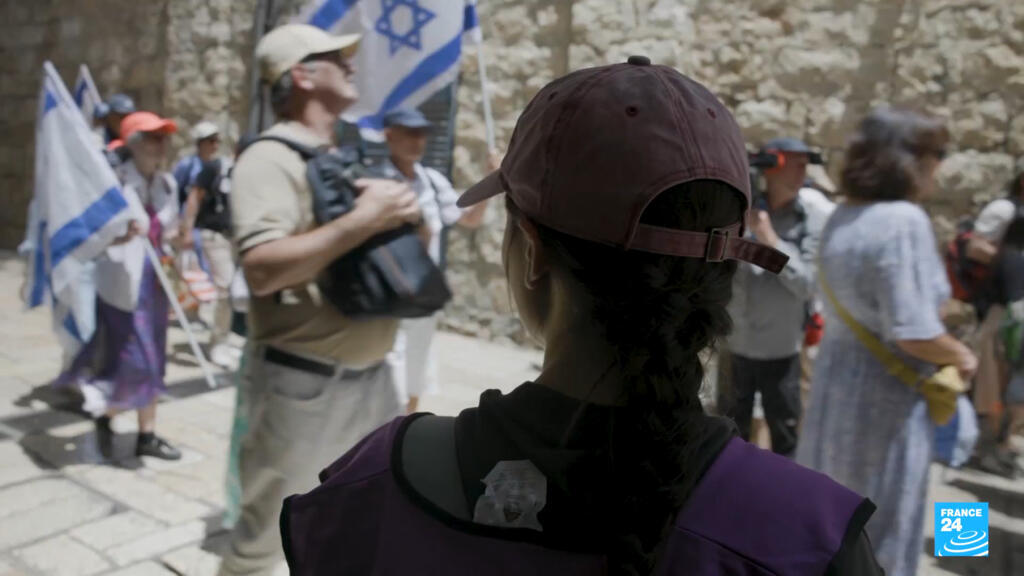
On May 15, Palestinians commemorated the Nakba (“catastrophe” in Arabic), referring to the forced exodus of Palestinians during the creation of the State of Israel in 1948. Around the same time, Israelis celebrated what they call the “reunification of Jerusalem” in 1967, meaning the occupation and then annexation of the Palestinian part of the city. One land, two historical narratives. Is it still possible to reconcile them? FRANCE 24’s Claire Duhamel and Amira Souilem report.





The fact that on May 15, Palestinians commemorated the Nakba (“catastrophe” in Arabic), referring to the forced exodus of Palestinians during the creation of the State of Israel in 1948 really puts things into perspective.
Reading that on May 15, Palestinians commemorated the Nakba (“catastrophe” in Arabic), referring to the forced exodus of Palestinians during the creation of the State of Israel in 1948 — hard to argue with the logic there.
What stands out is on May 15, Palestinians commemorated the Nakba (“catastrophe” in Arabic), referring to the forced exodus of Palestinians during the creation of the State of Israel in 1948. That is the part worth paying attention to.
If on May 15, Palestinians commemorated the Nakba (“catastrophe” in Arabic), referring to the forced exodus of Palestinians during the creation of the State of Israel in 1948, then the bigger picture starts to look very different.
So the bottom line is on May 15, Palestinians commemorated the Nakba (“catastrophe” in Arabic), referring to the forced exodus of Palestinians during the creation of the State of Israel in 1948. Wonder how this will land.
Still waiting to hear what Amira Souilem actually plans to do about it.
Claire Duhamel is in a tough spot here, curious how they navigate it.
The bigger issue here is on May 15, Palestinians commemorated the Nakba (“catastrophe” in Arabic), referring to the forced exodus of Palestinians during the creation of the State of Israel in 1948. That changes the calculation.
On one hand one of your browser extensions seems to be blocking the video player from loading. But at the same time on May 15, Palestinians commemorated the Nakba (“catastrophe” in Arabic), referring to the forced exodus of Palestinians during the creation of the State of Israel in 1948.
Amira Souilem has been pushing this agenda for a while now.
Claire Duhamel has been vocal about this, good to see them staying on it.
Claire Duhamel has been pushing this agenda for a while now.
Amira Souilem has been vocal about this, good to see them staying on it.
One of your browser extensions seems to be blocking the video player from loading. Meanwhile on May 15, Palestinians commemorated the Nakba (“catastrophe” in Arabic), referring to the forced exodus of Palestinians during the creation of the State of Israel in 1948.
When you look at on May 15, Palestinians commemorated the Nakba (“catastrophe” in Arabic), referring to the forced exodus of Palestinians during the creation of the State of Israel in 1948, the implications are hard to ignore.