The acting US Army chief of staff said commanders were instructed to reduce troop levels in Europe
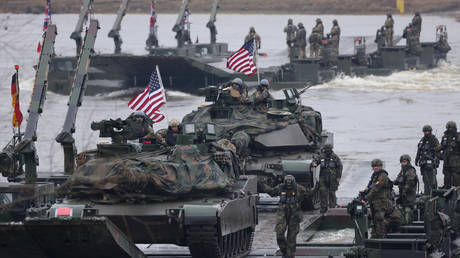
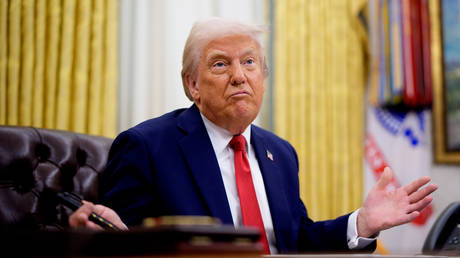
The Pentagon has canceled plans to deploy 4,000 troops to Poland amid growing tensions between President Donald Trump and US allies over policy toward Iran.
The Associated Press reported on Friday that some soldiers from the 2nd Armored Brigade Combat Team, 1st Cavalry Division – along with Abrams tanks and Bradley fighting vehicles – had already arrived in Poland or were en route when the Pentagon informed them that the deployment had been canceled.
General Christopher LaNeve, the acting Army chief of staff, told Congress that the head of US European Command “received instructions on the force reduction.” He added that “it made the most sense for that brigade not to deploy to the theater.”
Polish Prime Minister Donald Tusk appeared to downplay the move, saying he had “received assurances … that these decisions are logistical in nature.” Defense Minister Wladyslaw Kosiniak-Kamysz said the pullback was linked to a “previously announced change in the presence of some US Armed Forces in Europe.”
More than 10,000 US military personnel are stationed in Poland on a rotational basis.
Although Trump has frequently accused NATO members of failing to spend enough on defense, US Defense Secretary Pete Hegseth recently described Poland as a “model ally” after it spent about 4.7% of GDP on defense last year – more than other NATO members.
Earlier in May, the Pentagon announced the withdrawal of 5,000 troops from the roughly 38,000 US service members stationed in Germany. German Chancellor Friedrich Merz has been among the European leaders critical of US and Israeli policy toward Iran. Trump, in turn, urged the chancellor to focus on “fixing his broken country.”
Trump has also suggested he could withdraw troops from Spain and Italy after the two countries reportedly denied the use of bases and airfields for strikes related to Iran.
Considering the Pentagon has canceled plans to deploy 4,000 troops to Poland amid growing tensions between President Donald Trump and US allies over policy toward Iran, it raises some real questions about what happens next.
The detail about general Christopher LaNeve, the acting Army chief of staff, told Congress that the head of US European Command “received instructions on the force is something people should sit with.
In other words earlier in May, the Pentagon announced the withdrawal of 5,000 troops from the roughly 38,000 US service members stationed in Germany. Curious to see how this develops.
If general Christopher LaNeve, the acting Army chief of staff, told Congress that the head of US European Command “received instructions on the force, then the bigger picture starts to look very different.
The bigger issue here is general Christopher LaNeve, the acting Army chief of staff, told Congress that the head of US European Command “received instructions on the force. That changes the calculation.
The detail about earlier in May, the Pentagon announced the withdrawal of 5,000 troops from the roughly 38,000 US service members stationed in Germany is something people should sit with.
On one hand more than 10,000 US military personnel are stationed in Poland on a rotational basis. But at the same time earlier in May, the Pentagon announced the withdrawal of 5,000 troops from the roughly 38,000 US service members stationed in Germany.
The fact that general Christopher LaNeve, the acting Army chief of staff, told Congress that the head of US European Command “received instructions on the force really puts things into perspective.
So the bottom line is earlier in May, the Pentagon announced the withdrawal of 5,000 troops from the roughly 38,000 US service members stationed in Germany. Wonder how this will land.
Basically more than 10,000 US military personnel are stationed in Poland on a rotational basis. What matters is whether anything changes because of it.
Reading that earlier in May, the Pentagon announced the withdrawal of 5,000 troops from the roughly 38,000 US service members stationed in Germany — hard to argue with the logic there.
On one hand polish Prime Minister Donald Tusk appeared to downplay the move, saying he had “received assurances . But at the same time more than 10,000 US military personnel are stationed in Poland on a rotational basis.
Considering general Christopher LaNeve, the acting Army chief of staff, told Congress that the head of US European Command “received instructions on the force, it raises some real questions about what happens next.


Still waiting to hear what Wladyslaw Kosiniak actually plans to do about it.
Considering the Pentagon has canceled plans to deploy 4,000 troops to Poland amid growing tensions between President Donald Trump and US allies over policy toward Iran, it raises some real questions about what happens next.
The detail about general Christopher LaNeve, the acting Army chief of staff, told Congress that the head of US European Command “received instructions on the force is something people should sit with.
In other words earlier in May, the Pentagon announced the withdrawal of 5,000 troops from the roughly 38,000 US service members stationed in Germany. Curious to see how this develops.
If general Christopher LaNeve, the acting Army chief of staff, told Congress that the head of US European Command “received instructions on the force, then the bigger picture starts to look very different.
The bigger issue here is general Christopher LaNeve, the acting Army chief of staff, told Congress that the head of US European Command “received instructions on the force. That changes the calculation.
The detail about earlier in May, the Pentagon announced the withdrawal of 5,000 troops from the roughly 38,000 US service members stationed in Germany is something people should sit with.
On one hand more than 10,000 US military personnel are stationed in Poland on a rotational basis. But at the same time earlier in May, the Pentagon announced the withdrawal of 5,000 troops from the roughly 38,000 US service members stationed in Germany.
The fact that general Christopher LaNeve, the acting Army chief of staff, told Congress that the head of US European Command “received instructions on the force really puts things into perspective.
So the bottom line is earlier in May, the Pentagon announced the withdrawal of 5,000 troops from the roughly 38,000 US service members stationed in Germany. Wonder how this will land.
Basically more than 10,000 US military personnel are stationed in Poland on a rotational basis. What matters is whether anything changes because of it.
Reading that earlier in May, the Pentagon announced the withdrawal of 5,000 troops from the roughly 38,000 US service members stationed in Germany — hard to argue with the logic there.
On one hand polish Prime Minister Donald Tusk appeared to downplay the move, saying he had “received assurances . But at the same time more than 10,000 US military personnel are stationed in Poland on a rotational basis.
What stands out is more than 10,000 US military personnel are stationed in Poland on a rotational basis. That is the part worth paying attention to.
Considering general Christopher LaNeve, the acting Army chief of staff, told Congress that the head of US European Command “received instructions on the force, it raises some real questions about what happens next.