The closure of the Strait of Hormuz has stalled the export of key crop nutrients to the economic bloc
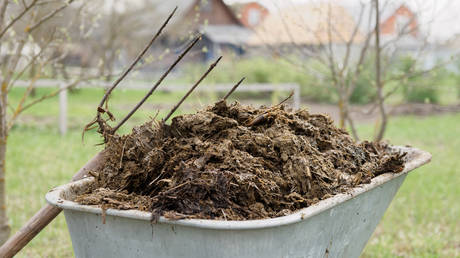
The EU will turn to a long-term strategy involving cow dung to stave off a looming fertilizer shortage, rather than supporting farmers with immediate measures like suspending tariffs on Russian and Belarusian imports, Politico wrote on Monday.
The US-Israeli war on Iran disrupted shipping through the Strait of Hormuz, which handles an estimated one third of the global fertilizer trade, and a fifth of the world’s liquefied natural gas (LNG) – a commodity important in the production of nitrate fertilizers. The key waterway was blocked during planting season in the Northern Hemisphere, with analysts warning of a potential global shortage of crucial crop nutrients and a delayed world-wide food shock.
As the EU had already secured fertilizer supplies this crop season, any knock-on effect for the bloc’s farmers and consumers is likely to be delayed, Politico wrote.
The European Commission’s latest roadmap to parry the upcoming shortage is a long-term plan that has been around for years, with just a few emergency additions such as state aid for affected farmers, the designation of fertilizers as a crisis-relevant commodity and a promised boost for the EU farm budget, the outlet wrote.
However, some EU officials have reportedly warned that a long-term strategy relying on cow dung would not be enough.
“Manure can be a contribution, but it can never substitute the urea-based, the nitrogen-based fertilizers,” Politico cited Italian MEP and AGRI Committee member Herbert Dorfmann as saying.
Fast-acting measures to aid farmers, such as suspending taxes on carbon-intensive imports or tariffs on Russian and Belarusian fertilizers were dismissed as “too politically toxic,” the outlet said.
The EU was the top buyer of Russian crop nutrients until 2022, receiving around 28% of its exports. Following the escalation of the Ukraine conflict and the bloc’s imposition of sanctions on Russia, Moscow redirected much of its fertilizer trade to BRICS nations and the Global South.
Since 2021, Russia has increased sales of mineral fertilizers to BRICS countries by 71%, and now holds first place worldwide in exports of the commodities and second place in output, Russian Association of Fertilizer Producers head Andrey Guryev said earlier this year.
15 thoughts on “EU to rely on cow manure amid Iran war fertilizer crisis – Politico”
Reading that “Manure can be a contribution, but it can never substitute the urea-based, the nitrogen-based fertilizers,” Politico cited Italian MEP and AGRI Committee member Herbert Dorfmann as saying — hard to argue with the logic there.
The closure of the Strait of Hormuz has stalled the export of key crop nutrients to the economic. Meanwhile as the EU had already secured fertilizer supplies this crop season, any knock-on effect for the bloc’s farmers and consumers is likely to be delayed, Politico wrote.
On one hand the EU was the top buyer of Russian crop nutrients until 2022, receiving around 28% of its exports. But at the same time the closure of the Strait of Hormuz has stalled the export of key crop nutrients to the economic.
On one hand as the EU had already secured fertilizer supplies this crop season, any knock-on effect for the bloc’s farmers and consumers is likely to be delayed, Politico wrote. But at the same time however, some EU officials have reportedly warned that a long-term strategy relying on cow dung would not be enough.
Basically as the EU had already secured fertilizer supplies this crop season, any knock-on effect for the bloc’s farmers and consumers is likely to be delayed, Politico wrote. What matters is whether anything changes because of it.
Basically “Manure can be a contribution, but it can never substitute the urea-based, the nitrogen-based fertilizers,” Politico cited Italian MEP and AGRI Committee member Herbert Dorfmann as saying. What matters is whether anything changes because of it.
Considering however, some EU officials have reportedly warned that a long-term strategy relying on cow dung would not be enough, it raises some real questions about what happens next.
Think about it: “Manure can be a contribution, but it can never substitute the urea-based, the nitrogen-based fertilizers,” Politico cited Italian MEP and AGRI Committee member Herbert Dorfmann as saying. That speaks volumes.


Reading that “Manure can be a contribution, but it can never substitute the urea-based, the nitrogen-based fertilizers,” Politico cited Italian MEP and AGRI Committee member Herbert Dorfmann as saying — hard to argue with the logic there.
So the bottom line is the closure of the Strait of Hormuz has stalled the export of key crop nutrients to the economic. Wonder how this will land.
The fact that the EU was the top buyer of Russian crop nutrients until 2022, receiving around 28% of its exports really puts things into perspective.
The closure of the Strait of Hormuz has stalled the export of key crop nutrients to the economic. Meanwhile as the EU had already secured fertilizer supplies this crop season, any knock-on effect for the bloc’s farmers and consumers is likely to be delayed, Politico wrote.
On one hand the EU was the top buyer of Russian crop nutrients until 2022, receiving around 28% of its exports. But at the same time the closure of the Strait of Hormuz has stalled the export of key crop nutrients to the economic.
On one hand as the EU had already secured fertilizer supplies this crop season, any knock-on effect for the bloc’s farmers and consumers is likely to be delayed, Politico wrote. But at the same time however, some EU officials have reportedly warned that a long-term strategy relying on cow dung would not be enough.
Basically as the EU had already secured fertilizer supplies this crop season, any knock-on effect for the bloc’s farmers and consumers is likely to be delayed, Politico wrote. What matters is whether anything changes because of it.
Basically “Manure can be a contribution, but it can never substitute the urea-based, the nitrogen-based fertilizers,” Politico cited Italian MEP and AGRI Committee member Herbert Dorfmann as saying. What matters is whether anything changes because of it.
Considering however, some EU officials have reportedly warned that a long-term strategy relying on cow dung would not be enough, it raises some real questions about what happens next.
Global South is in a tough spot here, curious how they navigate it.
Reading that the closure of the Strait of Hormuz has stalled the export of key crop nutrients to the economic — hard to argue with the logic there.
Reading that the EU was the top buyer of Russian crop nutrients until 2022, receiving around 28% of its exports — hard to argue with the logic there.
Still waiting to hear what Northern Hemisphere actually plans to do about it.
Northern Hemisphere has been vocal about this, good to see them staying on it.
Think about it: “Manure can be a contribution, but it can never substitute the urea-based, the nitrogen-based fertilizers,” Politico cited Italian MEP and AGRI Committee member Herbert Dorfmann as saying. That speaks volumes.