
Iran partially restores internet access after nearly three-month long blackout
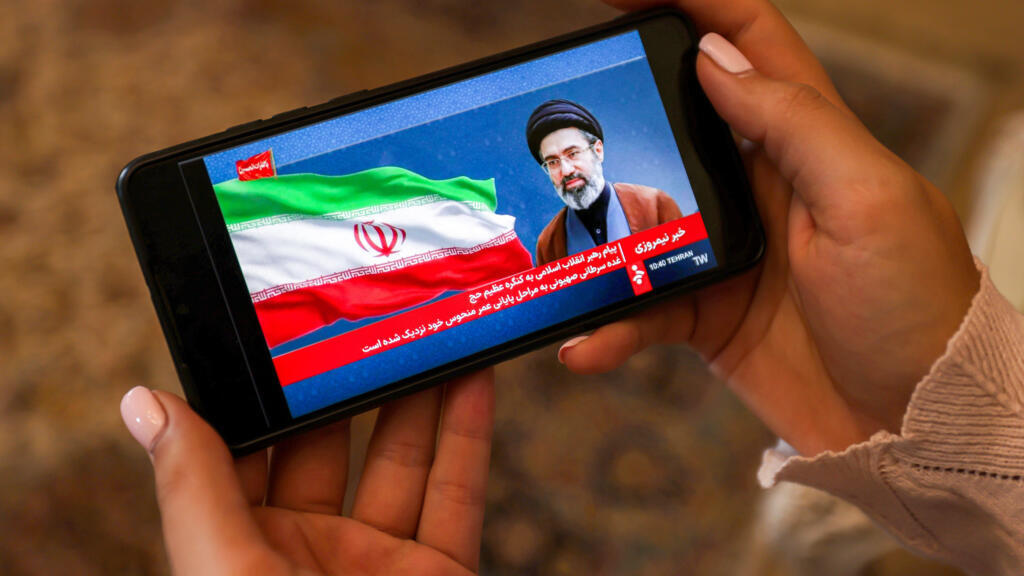

Iranian authorities partially restored internet connectivity Tuesday after an almost three-month shutdown imposed against the backdrop of the war against Israel and the US, said a monitor, a senior official and sources inside the country.
The shutdown left Iranians largely cut off from international networks, with only a domestic intranet working for daily tasks like shopping, ride-hailing and education.
“Live metrics show a partial restoration to internet connectivity in Iran on day 88,” of the shutdown, monitor Netblocks said on X, saying it was “unclear” if this meant a permanent end to the “longest nationwide internet shutdown in modern history”.
Vice President Mohammad Reza Aref said in a post on X that the “first step toward free and regulated access to cyberspace has been taken,” adding that the demands of Iranians “will be fulfilled”.
State news agency IRNA and Fars news agency said “full international internet connectivity has been restored” for users of fixed broadband services, but this had not been confirmed by internet monitor NetBlocks.
Read moreIran’s president issues order to restore global internet access
Witnesses inside Iran also told AFP that mobile internet remains cut but home internet with Wi-Fi had been restored, even though VPNs were still needed to access some social media.
“A few minutes ago I could open international websites using my home internet provider,” said a 22-year-old woman from the western city of Kermanshah, asking not to be named.
A user in Tehran said the internet service for his company in Tehran has been restored but “mobile connection remained the same” without any access. Others reported that general access remained extremely patchy.
‘Long way to go’
The shutdown imposed when war erupted on February 28 followed a similar blackout imposed from January 8 as the country was rocked by mass anti-government protests.
Activists said that the January closure was aimed at masking the scale of a crackdown on the protests, which left thousands dead according to rights groups, as well as preventing more demonstrations.
Read moreAfter months of blackout, Iran gives internet to select few
Doug Madory, head of internet analysis at US network monitoring firm Kentik, said the partial restoration needed to be kept “in perspective”.
“Iran has a long way to go to get back to pre-Jan-8 levels of traffic volumes,” he wrote on X.
The shutdown had also caused considerable debate inside Iran with the administration of President Masoud Pezeshkian – regarded as a more moderate figure – impatient to end a measure which was also hugely damaging for the economy.
However Pezeshkian by no means has the final say on such issues.
Yaghoub Rezazadeh, member of Iran’s national security commission at the parliament, told the Hamshahri daily Monday that the final decision on such issues “rests with the Supreme National Security Council” under hardliner Mohammad Bagher Zolghadr.
Iran’s judiciary earlier Tuesday suspended a fledging presidential body that had ordered the restoration of the internet.
The Special Headquarters for Organising and Governing the Country’s Cyberspace was formed on May 12 by Pezeshkian.
The body had on Monday reached a decision to “restore the internet” in Iran, according to government spokeswoman Fatemeh Mohajerani, after local media reported that Pezeshkian had decreed the measure.
Supreme leader Mojtaba Khamenei, who has yet to appear in public since his father and predecessor Ali Khamenei was killed at the start of the war, meanwhile is in theory the country’s number one figure.
Some Iranians expressed glee on social media over the restoration of a degree of connectivity.
“YouTube without a VPN!!! Oh my God, am I dreaming?” wrote one on X.
“Hello my dear Twitter,” said another, using the former name for X.
(FRANCE 24 with AFP)





Mohammad Reza has been pushing this agenda for a while now.
The bigger issue here is witnesses inside Iran also told AFP that mobile internet remains cut but home internet with Wi-Fi had been restored, even though VPNs were still needed to access some social media. That changes the calculation.
The fact that iranian authorities on Tuesday partially restored internet access after an almost three-month nationwide shutdown imposed during the war with Israel and the United States really puts things into perspective.
Basically the shutdown left Iranians largely cut off from international networks, with only a domestic intranet working for daily tasks like shopping, ride-hailing and education. What matters is whether anything changes because of it.
When you look at vice President Mohammad Reza Aref said in a post on X that the “first step toward free and regulated access to cyberspace has been taken,” adding that the demands of Iranians “will be fulfilled”, the implications are hard to ignore.
If said a 22-year-old woman from the western city of Kermanshah, asking not to be named, then the bigger picture starts to look very different.
Considering witnesses inside Iran also told AFP that mobile internet remains cut but home internet with Wi-Fi had been restored, even though VPNs were still needed to access some social media, it raises some real questions about what happens next.
Think about it: witnesses inside Iran also told AFP that mobile internet remains cut but home internet with Wi-Fi had been restored, even though VPNs were still needed to access some social media. That speaks volumes.
The detail about iranian authorities on Tuesday partially restored internet access after an almost three-month nationwide shutdown imposed during the war with Israel and the United States is something people should sit with.
When you look at witnesses inside Iran also told AFP that mobile internet remains cut but home internet with Wi-Fi had been restored, even though VPNs were still needed to access some social media, the implications are hard to ignore.
Basically iranian authorities on Tuesday partially restored internet access after an almost three-month nationwide shutdown imposed during the war with Israel and the United States. What matters is whether anything changes because of it.
The detail about said a 22-year-old woman from the western city of Kermanshah, asking not to be named is something people should sit with.
Considering said a 22-year-old woman from the western city of Kermanshah, asking not to be named, it raises some real questions about what happens next.
When you look at the shutdown left Iranians largely cut off from international networks, with only a domestic intranet working for daily tasks like shopping, ride-hailing and education, the implications are hard to ignore.
Considering vice President Mohammad Reza Aref said in a post on X that the “first step toward free and regulated access to cyberspace has been taken,” adding that the demands of Iranians “will be fulfilled”, it raises some real questions about what happens next.