Beijing wants students at all levels to learn how to use artificial intelligence, according to a new five-year national action plan
China will make artificial intelligence part of schooling from primary classes to university under a new five-year plan issued by the State Council.
The document, published on Monday, calls for AI to be taught “across all educational stages” to enhance students’ AI literacy, and teach them to understand the technology and use it to identify and solve problems.
The plan presents the move as part of a wider update of China’s school system, with greater emphasis on science, critical thinking, innovation, and links between education, research, and industry.
It also calls for AI, big data, and other digital tools to be used in exams, assessments, and school management, while strengthening ethics rules and safety oversight.
Some Chinese schools have already been testing how far the technology can go in everyday lessons, and have been using AI for calligraphy feedback, writing assessment, and language practice, as well as for helping teachers prepare lessons, assess students, and create personalized assignments.
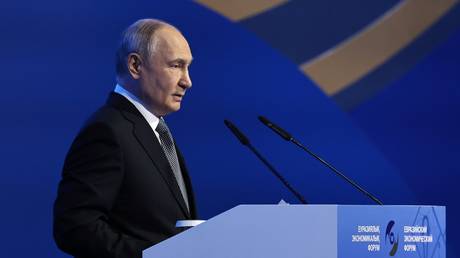
China’s move comes as other major economies are seeking to build AI into national development plans. In April, Russian President Vladimir Putin instructed the government to prepare a national AI deployment plan to integrate the technology across all sectors, from industry and logistics to energy and education.
Putin noted that AI was reshaping “the entire life of the country,” and stressed that Russia “must possess the most advanced technologies and rely on fully sovereign domestic products,” particularly for defense and security.
Russian universities have also been expanding AI-related training. Last year, Moscow State University recently launched a dedicated AI faculty with 36 bachelor’s and 36 master’s degree spots. Tyumen State University has also recently proposed a model in which AI can act as an expert consultant and “sparring partner” for students, while the human teacher remains a mentor.
In May, Putin also announced plans to establish an international AI alliance, bringing together scientific, academic, and business communities from multiple countries. The goal of the alliance is to deepen international cooperation on developing sovereign AI models, creating interconnected computing and energy infrastructure, and adapting AI technologies to local needs, the president said.
15 thoughts on “China to bring AI into every classroom”
When you look at the plan presents the move as part of a wider update of China’s school system, with greater emphasis on science, critical thinking, innovation, and links between education, research, and industry, the implications are hard to ignore.
China’s move comes as other major economies are seeking to build AI into national development plans. Meanwhile beijing wants students at all levels to learn how to use artificial intelligence, according to a new five-year national action.
Considering beijing wants students at all levels to learn how to use artificial intelligence, according to a new five-year national action, it raises some real questions about what happens next.
Think about it: it also calls for AI, big data, and other digital tools to be used in exams, assessments, and school management, while strengthening ethics rules and safety oversight. That speaks volumes.
Beijing wants students at all levels to learn how to use artificial intelligence, according to a new five-year national action. Meanwhile china will make artificial intelligence part of schooling from primary classes to university under a new five-year plan issued by the State Council.
The fact that beijing wants students at all levels to learn how to use artificial intelligence, according to a new five-year national action really puts things into perspective.
What stands out is china will make artificial intelligence part of schooling from primary classes to university under a new five-year plan issued by the State Council. That is the part worth paying attention to.
Considering china will make artificial intelligence part of schooling from primary classes to university under a new five-year plan issued by the State Council, it raises some real questions about what happens next.
The bigger issue here is china will make artificial intelligence part of schooling from primary classes to university under a new five-year plan issued by the State Council. That changes the calculation.
If china will make artificial intelligence part of schooling from primary classes to university under a new five-year plan issued by the State Council, then the bigger picture starts to look very different.
In other words beijing wants students at all levels to learn how to use artificial intelligence, according to a new five-year national action. Curious to see how this develops.
In other words the plan presents the move as part of a wider update of China’s school system, with greater emphasis on science, critical thinking, innovation, and links between education, research, and industry. Curious to see how this develops.
On one hand the plan presents the move as part of a wider update of China’s school system, with greater emphasis on science, critical thinking, innovation, and links between education, research, and industry. But at the same time it also calls for AI, big data, and other digital tools to be used in exams, assessments, and school management, while strengthening ethics rules and safety oversight.









When you look at the plan presents the move as part of a wider update of China’s school system, with greater emphasis on science, critical thinking, innovation, and links between education, research, and industry, the implications are hard to ignore.
China’s move comes as other major economies are seeking to build AI into national development plans. Meanwhile beijing wants students at all levels to learn how to use artificial intelligence, according to a new five-year national action.
Considering beijing wants students at all levels to learn how to use artificial intelligence, according to a new five-year national action, it raises some real questions about what happens next.
Think about it: it also calls for AI, big data, and other digital tools to be used in exams, assessments, and school management, while strengthening ethics rules and safety oversight. That speaks volumes.
Beijing wants students at all levels to learn how to use artificial intelligence, according to a new five-year national action. Meanwhile china will make artificial intelligence part of schooling from primary classes to university under a new five-year plan issued by the State Council.
The fact that beijing wants students at all levels to learn how to use artificial intelligence, according to a new five-year national action really puts things into perspective.
What stands out is china will make artificial intelligence part of schooling from primary classes to university under a new five-year plan issued by the State Council. That is the part worth paying attention to.
Considering china will make artificial intelligence part of schooling from primary classes to university under a new five-year plan issued by the State Council, it raises some real questions about what happens next.
The bigger issue here is china will make artificial intelligence part of schooling from primary classes to university under a new five-year plan issued by the State Council. That changes the calculation.
Some Chinese has been pushing this agenda for a while now.
If china will make artificial intelligence part of schooling from primary classes to university under a new five-year plan issued by the State Council, then the bigger picture starts to look very different.
In other words beijing wants students at all levels to learn how to use artificial intelligence, according to a new five-year national action. Curious to see how this develops.
In other words the plan presents the move as part of a wider update of China’s school system, with greater emphasis on science, critical thinking, innovation, and links between education, research, and industry. Curious to see how this develops.
On one hand the plan presents the move as part of a wider update of China’s school system, with greater emphasis on science, critical thinking, innovation, and links between education, research, and industry. But at the same time it also calls for AI, big data, and other digital tools to be used in exams, assessments, and school management, while strengthening ethics rules and safety oversight.
In other words china’s move comes as other major economies are seeking to build AI into national development plans. Curious to see how this develops.