
Why Iran’s unseen leader remains in the shadows
Why Iran’s unseen leader remains in the shadows
One of your browser extensions seems to be blocking the video player from loading. To watch this content, you may need to disable it on this site.

Play (16:58 min)

Reading time
1 min
The images emerging from Tehran are striking. Tens of thousands of mourners dressed in black have gathered at the Imam Khomeini Grand Mosalla for the funeral and lying in state of Ayatollah Ali Khamenei, following his assassination on the opening day of a war between Iran and the United States on February 28.
State television has broadcast scenes of mass mourning throughout the week: worshippers filing past the late Supreme Leader’s coffin, emotional prayers, and crowds chanting calls for revenge. In a rare move, a limited number of Western media outlets have been permitted to film the ceremonies, offering the outside world a glimpse of a carefully choreographed display of national mourning.
The week-long commemorations have prompted intense debate among analysts. For some, the unprecedented public turnout reflects genuine grief and uncertainty over Iran’s future. For others, the ceremonies represent a calculated projection of strength by a regime determined to demonstrate continuity and resilience despite an extraordinary crisis.
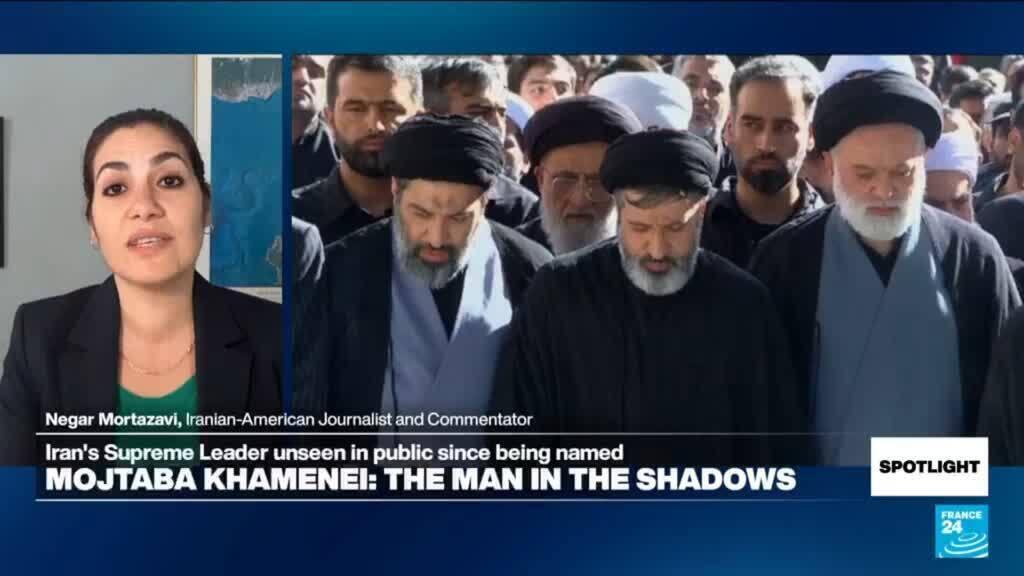
Questions also remain over the country’s political succession. Mojtaba Khamenei, widely viewed by some observers as a potential successor to his father, has yet to appear publicly. However, three of his brothers attended the funeral ceremonies, alongside relatives mourning members of the Khamenei family reportedly killed in the February 28 attack, including the Ayatollah’s wife, eldest daughter, son, daughter-in-law, and three-year-old granddaughter.
To examine what these scenes reveal about the state of the Islamic Republic, and what they could mean for Iran’s political future, we’re joined by Negar Mortazavi, an Iranian-American journalist, Senior Fellow at the Center for International Policy, and host of the Iran Podcast.


State television has broadcast scenes of mass mourning throughout the week: worshippers filing past the late Supreme Leader’s coffin, emotional prayers, and crowds chanting calls for revenge. Meanwhile the week-long commemorations have prompted intense debate among analysts.
The detail about the images emerging from Tehran are striking is something people should sit with.
Think about it: the week-long commemorations have prompted intense debate among analysts. That speaks volumes.
Considering the week-long commemorations have prompted intense debate among analysts, it raises some real questions about what happens next.
Reading that state television has broadcast scenes of mass mourning throughout the week: worshippers filing past the late Supreme Leader’s coffin, emotional prayers, and crowds chanting calls for revenge — hard to argue with the logic there.
The bigger issue here is the images emerging from Tehran are striking. That changes the calculation.
Think about it: state television has broadcast scenes of mass mourning throughout the week: worshippers filing past the late Supreme Leader’s coffin, emotional prayers, and crowds chanting calls for revenge. That speaks volumes.
When you look at state television has broadcast scenes of mass mourning throughout the week: worshippers filing past the late Supreme Leader’s coffin, emotional prayers, and crowds chanting calls for revenge, the implications are hard to ignore.
If the images emerging from Tehran are striking, then the bigger picture starts to look very different.
On one hand the week-long commemorations have prompted intense debate among analysts. But at the same time to display this content from YouTube, you must enable advertisement tracking and audience measurement.
The fact that the week-long commemorations have prompted intense debate among analysts really puts things into perspective.
So the bottom line is state television has broadcast scenes of mass mourning throughout the week: worshippers filing past the late Supreme Leader’s coffin, emotional prayers, and crowds chanting calls for revenge. Wonder how this will land.
Imam Khomeini is in a tough spot here, curious how they navigate it.
The week-long commemorations have prompted intense debate among analysts. Meanwhile to display this content from YouTube, you must enable advertisement tracking and audience measurement.
The bigger issue here is state television has broadcast scenes of mass mourning throughout the week: worshippers filing past the late Supreme Leader’s coffin, emotional prayers, and crowds chanting calls for revenge. That changes the calculation.