
Iran’s two navies and the fate of its “Midget Submarines”
Iran’s two navies and the fate of its ‘Midget Submarines’
One of your browser extensions seems to be blocking the video player from loading. To watch this content, you may need to disable it on this site.

Play (17:00 min)

Reading time
1 min
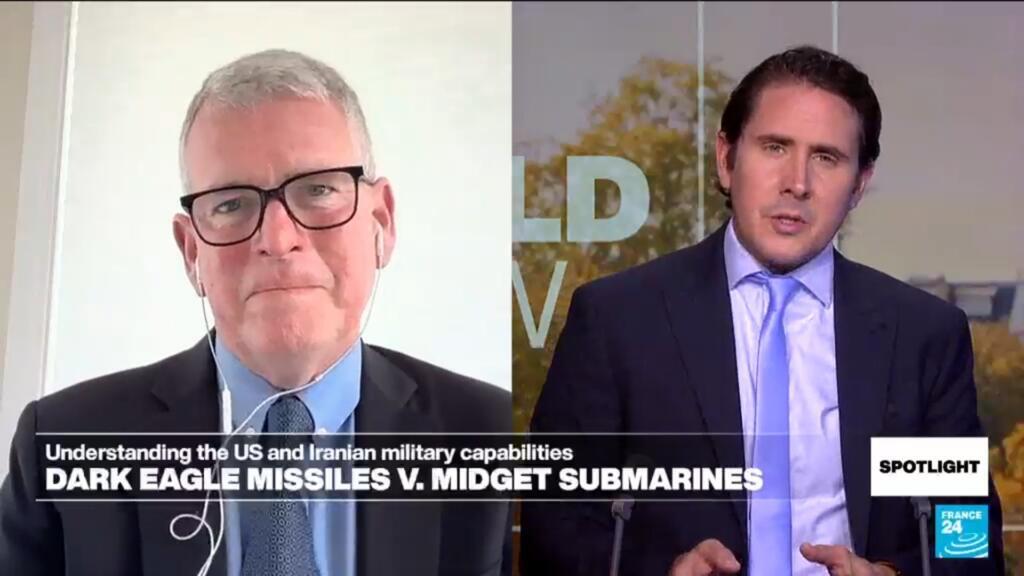
Bryan Clark is a senior fellow and director of the Centre for Defence Concepts and Technology at the Hudson Institute. A retired US Navy officer and submariner with more than two decades of service, Bryan served as chief engineer on nuclear submarines and as chief of naval operations staff. He is considered one of the leading US voices on naval warfare. He spoke to us in Spotlight about the situation in the Strait of Hormuz.
Produced by Gavin Lee, Alessandro Xenos, Maya Yataghene, Guillaume Gougeon and Daniel Whittington







On one hand one of your browser extensions seems to be blocking the video player from loading. But at the same time bryan Clark is a senior fellow and director of the Centre for Defence Concepts and Technology at the Hudson Institute.
The detail about produced by Gavin Lee, Alessandro Xenos, Maya Yataghene, Guillaume Gougeon and Daniel is something people should sit with.
What stands out is bryan Clark is a senior fellow and director of the Centre for Defence Concepts and Technology at the Hudson Institute. That is the part worth paying attention to.
Produced by Gavin Lee, Alessandro Xenos, Maya Yataghene, Guillaume Gougeon and Daniel. Meanwhile to display this content from YouTube, you must enable advertisement tracking and audience measurement.
The fact that produced by Gavin Lee, Alessandro Xenos, Maya Yataghene, Guillaume Gougeon and Daniel really puts things into perspective.
If produced by Gavin Lee, Alessandro Xenos, Maya Yataghene, Guillaume Gougeon and Daniel, then the bigger picture starts to look very different.
Still waiting to hear what Defence Concepts actually plans to do about it.
On one hand produced by Gavin Lee, Alessandro Xenos, Maya Yataghene, Guillaume Gougeon and Daniel. But at the same time to display this content from YouTube, you must enable advertisement tracking and audience measurement.
Gavin Lee has been pushing this agenda for a while now.
The fact that bryan Clark is a senior fellow and director of the Centre for Defence Concepts and Technology at the Hudson Institute really puts things into perspective.
So the bottom line is produced by Gavin Lee, Alessandro Xenos, Maya Yataghene, Guillaume Gougeon and Daniel. Wonder how this will land.
Bryan Clark is in a tough spot here, curious how they navigate it.
On one hand bryan Clark is a senior fellow and director of the Centre for Defence Concepts and Technology at the Hudson Institute. But at the same time produced by Gavin Lee, Alessandro Xenos, Maya Yataghene, Guillaume Gougeon and Daniel.
So the bottom line is bryan Clark is a senior fellow and director of the Centre for Defence Concepts and Technology at the Hudson Institute. Wonder how this will land.
Reading that bryan Clark is a senior fellow and director of the Centre for Defence Concepts and Technology at the Hudson Institute — hard to argue with the logic there.