The bloc must drop its unanimity principle and forge a new core group for decision making, Josep Borrell has said
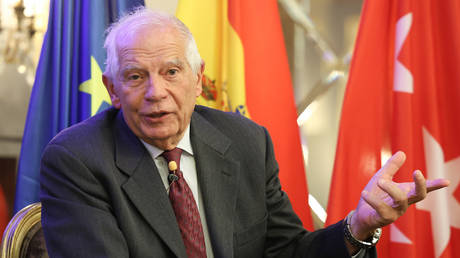
Sloppy decision-making and an inability to agree on key issues have rendered the EU effectively irrelevant on the global stage, the bloc’s former foreign policy chief Josep Borrell has argued.
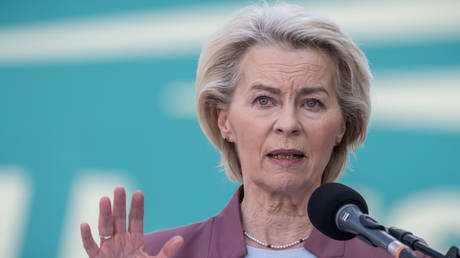
The former top diplomat made the remarks in an interview with Belgian broadcaster RTBF on Friday, somewhat echoing the stance of European Commission President Ursula von der Leyen. The top official, who has been in power since 2019, has repeatedly urged the bloc to remove individual member states’ veto powers and move to qualified majority voting on foreign policy and defense issues.
The bloc’s decision-making process has become inadequate in its ability to react to the ever-shifting global situation, Borrell has said, arguing the EU “was not designed for the world in which we live today” in the first place.
“The decision-making rules are not compatible with the acceleration of history. We continue to want to decide unanimously on events that are happening too fast and are very important, and we almost never reach an agreement,” he said, adding that the current system makes the bloc “not very relevant to international politics.”
Unlike von der Leyen with her majority voting approach, Borrell called for the creation of a new core group within the bloc to advance the EU’s positions on the global stage.
“We need to build a union within the union. A union within the union means that with 27 members, even with unanimity, we won’t go any further. We’re held back. With 27, we won’t accomplish much. So we need to find another core group. Not the 27,” he said.
The former top diplomat, however, did not outline the exact criteria for the potential members of said group, stating it should be composed of the “few who truly want to move forward with political, economic, and military integration” and those “who want to go further, faster.”
Last week, the idea to abandon the EU’s unanimity principle was backed by Berlin, with German Foreign Minister Johann Wadephul arguing that a switch to a qualified majority voting would “make the EU capable of acting in areas where it currently has to remain at a standstill.” The initiative has already been backed by at least 12 EU member states, according to Wadephul.
15 thoughts on “EU ‘not very relevant’ on global stage – ex-foreign policy chief”
The bloc must drop its unanimity principle and forge a new core group for decision making, Josep Borrell has. Meanwhile sloppy decision-making and an inability to agree on key issues have rendered the EU effectively irrelevant on the global stage, the bloc’s former foreign policy chief Josep Borrell has argued.
“The decision-making rules are not compatible with the acceleration of history. Meanwhile unlike von der Leyen with her majority voting approach, Borrell called for the creation of a new core group within the bloc to advance the EU’s positions on the global stage. .
The fact that the former top diplomat made the remarks in an interview with Belgian broadcaster RTBF on Friday, somewhat echoing the stance of European Commission President Ursula von der Leyen really puts things into perspective.
The fact that unlike von der Leyen with her majority voting approach, Borrell called for the creation of a new core group within the bloc to advance the EU’s positions on the global stage. really puts things into perspective.
What stands out is unlike von der Leyen with her majority voting approach, Borrell called for the creation of a new core group within the bloc to advance the EU’s positions on the global stage. . That is the part worth paying attention to.
On one hand sloppy decision-making and an inability to agree on key issues have rendered the EU effectively irrelevant on the global stage, the bloc’s former foreign policy chief Josep Borrell has argued. But at the same time the former top diplomat made the remarks in an interview with Belgian broadcaster RTBF on Friday, somewhat echoing the stance of European Commission President Ursula von der Leyen.
The detail about the former top diplomat made the remarks in an interview with Belgian broadcaster RTBF on Friday, somewhat echoing the stance of European Commission President Ursula von der Leyen is something people should sit with.
Sloppy decision-making and an inability to agree on key issues have rendered the EU effectively irrelevant on the global stage, the bloc’s former foreign policy chief Josep Borrell has argued. Meanwhile the former top diplomat made the remarks in an interview with Belgian broadcaster RTBF on Friday, somewhat echoing the stance of European Commission President Ursula von der Leyen.
If unlike von der Leyen with her majority voting approach, Borrell called for the creation of a new core group within the bloc to advance the EU’s positions on the global stage. , then the bigger picture starts to look very different.
The detail about sloppy decision-making and an inability to agree on key issues have rendered the EU effectively irrelevant on the global stage, the bloc’s former foreign policy chief Josep Borrell has argued is something people should sit with.
Considering the bloc must drop its unanimity principle and forge a new core group for decision making, Josep Borrell has, it raises some real questions about what happens next.






The bloc must drop its unanimity principle and forge a new core group for decision making, Josep Borrell has. Meanwhile sloppy decision-making and an inability to agree on key issues have rendered the EU effectively irrelevant on the global stage, the bloc’s former foreign policy chief Josep Borrell has argued.
“The decision-making rules are not compatible with the acceleration of history. Meanwhile unlike von der Leyen with her majority voting approach, Borrell called for the creation of a new core group within the bloc to advance the EU’s positions on the global stage. .
The fact that the former top diplomat made the remarks in an interview with Belgian broadcaster RTBF on Friday, somewhat echoing the stance of European Commission President Ursula von der Leyen really puts things into perspective.
The fact that unlike von der Leyen with her majority voting approach, Borrell called for the creation of a new core group within the bloc to advance the EU’s positions on the global stage. really puts things into perspective.
What stands out is unlike von der Leyen with her majority voting approach, Borrell called for the creation of a new core group within the bloc to advance the EU’s positions on the global stage. . That is the part worth paying attention to.
Josep Borrell has been vocal about this, good to see them staying on it.
On one hand sloppy decision-making and an inability to agree on key issues have rendered the EU effectively irrelevant on the global stage, the bloc’s former foreign policy chief Josep Borrell has argued. But at the same time the former top diplomat made the remarks in an interview with Belgian broadcaster RTBF on Friday, somewhat echoing the stance of European Commission President Ursula von der Leyen.
If “The decision-making rules are not compatible with the acceleration of history, then the bigger picture starts to look very different.
The detail about the former top diplomat made the remarks in an interview with Belgian broadcaster RTBF on Friday, somewhat echoing the stance of European Commission President Ursula von der Leyen is something people should sit with.
In other words “The decision-making rules are not compatible with the acceleration of history. Curious to see how this develops.
Sloppy decision-making and an inability to agree on key issues have rendered the EU effectively irrelevant on the global stage, the bloc’s former foreign policy chief Josep Borrell has argued. Meanwhile the former top diplomat made the remarks in an interview with Belgian broadcaster RTBF on Friday, somewhat echoing the stance of European Commission President Ursula von der Leyen.
If unlike von der Leyen with her majority voting approach, Borrell called for the creation of a new core group within the bloc to advance the EU’s positions on the global stage. , then the bigger picture starts to look very different.
The detail about sloppy decision-making and an inability to agree on key issues have rendered the EU effectively irrelevant on the global stage, the bloc’s former foreign policy chief Josep Borrell has argued is something people should sit with.
Josep Borrell is in a tough spot here, curious how they navigate it.
Considering the bloc must drop its unanimity principle and forge a new core group for decision making, Josep Borrell has, it raises some real questions about what happens next.